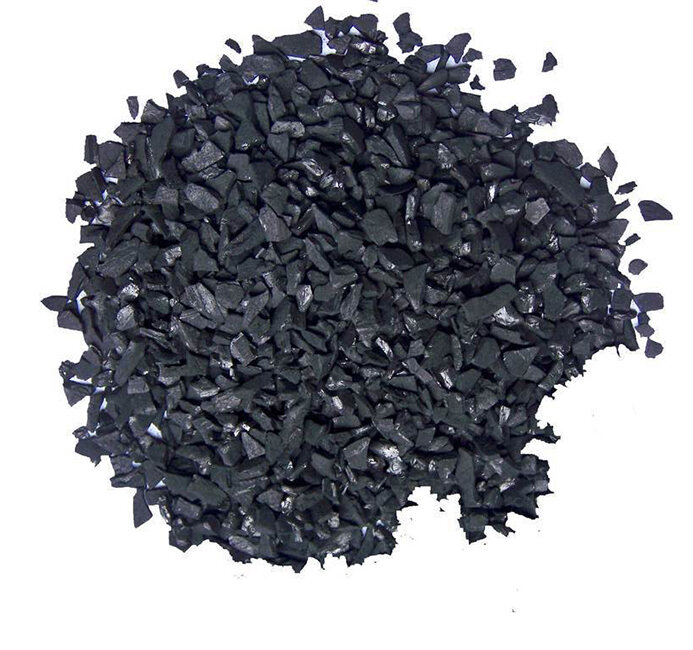
Coconut shell activated carbon is a high-performance adsorbent with a highly developed pore structure. It contains numerous pores of different shapes and sizes, including micropores, mesopores, and macropores. The total internal pore wall area forms its specific surface area, which can reach approximately 700–1600 m²/g. Thanks to this large surface area and rich pore distribution, coconut shell activated carbon offers excellent adsorption capacity and is widely used in air purification, water treatment, wastewater treatment, and industrial filtration applications.
The adsorption performance of coconut shell activated carbon is mainly related to three types of adsorption mechanisms: physical adsorption, chemical adsorption, and ion exchange adsorption.
Physical adsorption is mainly caused by intermolecular forces, also known as Van der Waals forces. During this process, the adsorbed molecules are not fixed to specific active sites on the surface of the activated carbon. Instead, they can move relatively freely along the interface.
Physical adsorption is usually an exothermic process with relatively low adsorption heat, generally around 21–41.8 kJ/mol. It does not require high activation energy and can occur even at low temperatures. Another important feature is that it is usually reversible. While molecules are being adsorbed onto the carbon surface, some may also leave the surface due to thermal motion, a process known as desorption.
Because of this reversibility and strong pore adsorption capacity, coconut shell activated carbon is widely used for removing odors, volatile organic compounds, chlorine, organic pollutants, and other impurities from air and water.
During the production and activation process, functional groups such as carboxyl groups and hydroxyl groups may form on the surface of coconut shell activated carbon. These surface functional groups allow activated carbon to participate in chemical adsorption.
Chemical adsorption occurs when chemical bonds form between the adsorbent and the adsorbate. This process may involve a chemical reaction, creating a stronger connection between the activated carbon surface and the target substance. Compared with physical adsorption, chemical adsorption generally requires higher activation energy and usually occurs more easily at elevated temperatures.
The adsorption heat of chemical adsorption is relatively high, typically in the range of 41.8–418 kJ/mol. It is also more selective, meaning that coconut shell activated carbon may show stronger adsorption performance for certain specific contaminants depending on its surface chemistry and pore structure.
Ion exchange adsorption occurs when ions from a substance are attracted to charged sites on the surface of the activated carbon through electrostatic forces. During this adsorption process, an equivalent exchange of ions may take place.
The ionic charge plays a key role in ion exchange adsorption. In many cases, the adsorbed substances may undergo chemical changes, which can alter their original chemical properties. Therefore, ion exchange adsorption is generally considered a type of chemical adsorption. This process is often difficult to reverse completely, and even after regeneration, the activated carbon may not fully return to its original adsorption performance.
CarbonFresh manufactures high-quality activated carbon products designed for reliable performance in air purification, water treatment, wastewater treatment, gas purification, and industrial filtration systems. Our coconut shell activated carbon features a developed pore structure, large specific surface area, strong adsorption capacity, and stable quality.
To help customers evaluate product performance, CarbonFresh can provide free activated carbon samples for testing, inspection, and comparison.
If you are looking for a dependable activated carbon supplier for air or water purification applications, please feel free to contact us at:
Email: info@carbonfreshcn.com