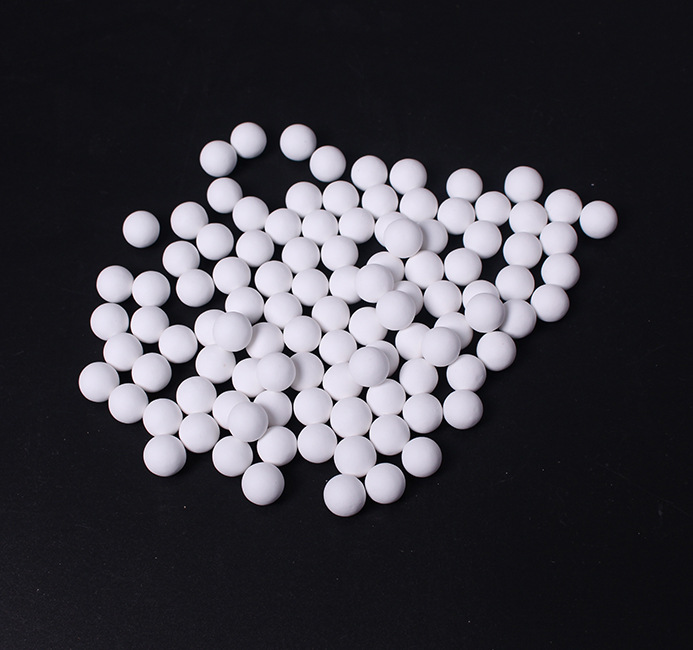
As an efficient and cost-effective activated alumina adsorbent, it is suitable for many industries that require stable moisture removal and contamination control.
Gas drying is one of the most important uses of activated alumina desiccant. It can effectively remove water vapor from various industrial gases and help prevent corrosion, freezing, equipment blockage, and process instability.
Activated alumina is commonly used for drying:
In petrochemical processes, moisture in gas streams may cause pipeline corrosion, winter freezing, equipment blockage, or reduced catalyst efficiency. Activated alumina balls help maintain gas quality and improve the reliability of downstream processing.
Activated alumina desiccant is also widely used for drying industrial gases such as:
It is especially suitable for compressed air systems, pneumatic equipment, precision instruments, air separation units, and food-grade CO₂ purification and drying.
In the energy sector, activated alumina can be used for the dehydration of:
By reducing moisture content, activated alumina helps protect equipment, improve energy conversion efficiency, and ensure stable system operation.
Activated alumina adsorbent is also used for removing water from liquids, especially in industrial-grade purification processes where moderate drying depth and cost efficiency are required.
Activated alumina can be used to dry and purify polar solvents such as:
Compared with molecular sieve, activated alumina usually provides lower drying precision, but it offers a more economical solution for many general industrial solvent dehydration applications.
Activated alumina desiccant is used for dehydration treatment of:
Removing water from oil helps prevent emulsification, oxidation, and deterioration, thereby extending the service life of equipment such as transformers, engines, and hydraulic systems.
Activated alumina is an effective adsorbent for water purification. It is widely used to remove harmful impurities from drinking water and industrial wastewater, especially:
In areas with high fluoride levels in drinking water, activated alumina adsorbent is commonly applied for fluoride removal due to its strong adsorption performance and stable operation.
Because of its porous structure, activated alumina can be used as a catalyst carrier in petrochemical processes, including hydrogenation and dehydrogenation reactions. It is also used as a support material for reforming catalysts and automotive exhaust purification catalysts.
Activated alumina desiccant can be used for drying food-grade gases, such as nitrogen used in food packaging. It may also be applied in pharmaceutical intermediate production to remove small amounts of moisture, provided that the product meets relevant food-grade or pharmaceutical-grade purity requirements.
The application of activated alumina desiccant is closely related to its physical and chemical properties.
Compared with molecular sieve, activated alumina is generally more cost-effective and has slightly lower selectivity for water adsorption. It is suitable for applications requiring medium drying depth, with typical dew points around -30°C to -40°C.
Compared with calcium chloride desiccant, activated alumina does not deliquesce and is non-corrosive. It does not contaminate the materials being dried, making it more suitable for food, pharmaceutical, precision instrument, and industrial gas applications.
Activated alumina desiccant is a reliable and economical drying and adsorption material. With its high adsorption capacity, thermal stability, and regenerability, it is widely used in gas drying, compressed air drying, natural gas dehydration, solvent dehydration, oil purification, water treatment, and catalyst support.
For industries seeking a stable, reusable, and cost-effective desiccant, activated alumina balls are an excellent choice for moisture removal and purification processes.