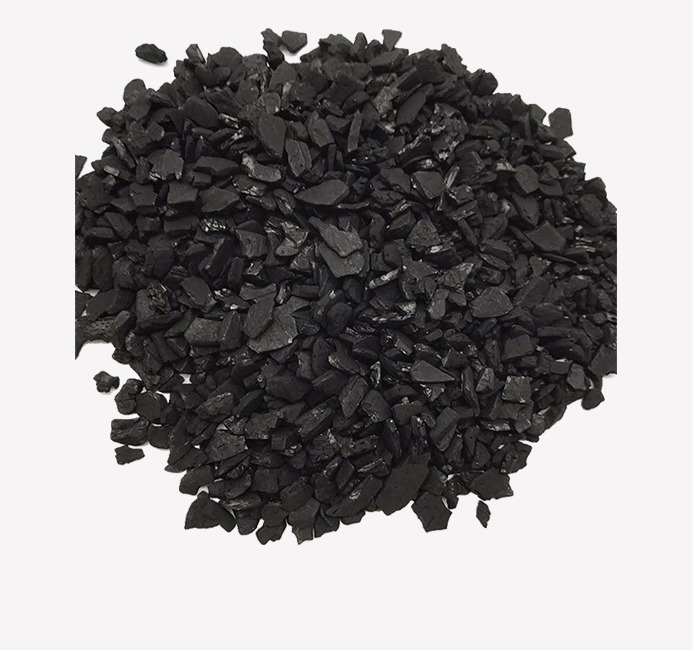
Exceptional Performance of Coconut Shell Activated Carbon in Carbonization Process
Coconut shell activated carbon products stand out in the carbonization process, where raw materials undergo carbonization at temperatures reaching several hundred degrees Celsius, followed by activation to create the final product. The carbonization occurs in an inert atmosphere, leading to the thermal decomposition of the raw materials that release volatile substances, resulting in carbonized products. At this stage, the surface area of carbonized products is only a few tens of square meters per gram. However, the activated coconut shell carbon, characterized by its developed porosity and significant specific surface area, is produced by further activating the carbonized product using steam, carbon monoxide, and other agents at temperatures between 700°C and 1100°C.
As an adsorbent material, coconut shell activated carbon is primarily derived from plant-based raw materials. In the early stages of carbon material research, the relationship between the structure of plant raw materials and the carbon structure was studied. Differences in activation levels were explained using cellulose, lignin, and other plant constituents, reflecting varying reactivity. Subsequently, research on carbon materials has shifted focus to the pore structures formed during gasification reactions related to carbon activation and the impact of tarry substances generated during the carbonization process, which may block or seal the pores. The goal is to enhance the removal of these impurities through activation reactions. However, merely establishing knowledge based on the structural analysis of activated carbon does not convincingly clarify the activation process.
We have deepened our understanding of the activation mechanisms by combining methods such as X-ray analysis with other techniques, paving the way for quantitative development in activation theories. Although research into activation has not yet yielded thoroughly clear results, the experimental findings are remarkably consistent. There is now a general understanding of how the pore structure of coconut shell carbon products forms during both carbonization and activation.
In the gas activation method for coconut shell activated carbon, raw materials such as wood, coal, resin, and asphalt undergo thermal decomposition, with most hydrogen and oxygen escaping as gases while the carbon remains as microcrystalline graphite. At higher temperatures, organic compounds combine repeatedly, ultimately forming crystalline graphite. These microcrystals are oriented in a small, orderly fashion, with gaps existing between them. However, the release of volatile substances, the precipitation of tarry materials, and the results of thermal decomposition can lead to the blockages in these gaps caused by non-quality carbon. As a result, while the carbonized products possess some porosity, they exhibit a smaller specific surface area and significantly lower adsorption capabilities.