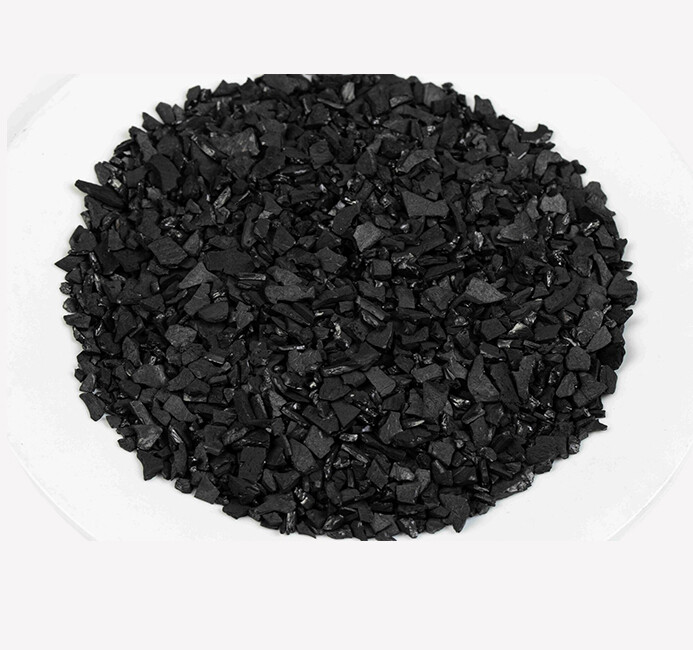
Activated carbon is widely used in water treatment because it can effectively adsorb hydrophobic organic contaminants in aqueous solutions, including benzene, naphthalene, and chlorobenzene. Thanks to its porous structure and large surface area, activated carbon enables rapid capture and removal of organic pollutants, making it a common solution for drinking water purification, industrial wastewater treatment, and groundwater remediation. For example, naphthalene adsorption on activated carbon is highly efficient due to pore-filling and surface interactions; similarly, activated carbon is frequently applied to control benzene and other aromatic compounds in water.
However, adsorption alone has limitations for chlorinated organic contaminants. While chlorinated pollutants can be strongly adsorbed onto activated carbon, activated carbon by itself cannot effectively dechlorinate or transform these compounds. As a result, long-term cleanup performance may be constrained unless an additional conversion mechanism is introduced. To address this challenge, more advanced strategies are required to achieve both efficient adsorption and chemical transformation of persistent organics.
In recent years, Pd-based catalytic adsorption has emerged as a promising approach for water treatment and environmental remediation. Pd-based bimetallic catalysts and catalytic adsorbents can activate hydrogen (e.g., or in situ generated hydrogen) and catalyze reductive transformations of a wide range of contaminants. This “adsorption + conversion” pathway helps convert difficult-to-remove organics into more manageable products. In general, Pd-based catalysts offer strong activity, stability, and selectivity, and they are often considered to present lower toxicity concerns compared with other metals such as Ir, Rh, Zn, and Ru.
To improve metal dispersion, enhance treatment efficiency, and facilitate phase separation, Pd and promoter metals are commonly supported on carrier materials such as activated carbon, silica, alumina, and zeolites. Among these options, activated carbon supported bimetallic nanoparticles are frequently used to evaluate and treat hard-to-clean contaminated sediments. Activated carbon serves as a high-capacity adsorbent to concentrate pollutants, while the supported metal active sites promote dechlorination and reductive conversion, significantly improving overall removal of complex organic contamination.
Hydrophobic pollutants such as benzene, naphthalene, and chlorobenzene are among the most common contaminants found in groundwater and soils. By adopting integrated strategies that combine adsorption with catalytic transformation, it is possible to more effectively remove organic pollutants from soil, sediment, and water, and achieve more stable long-term remediation outcomes.