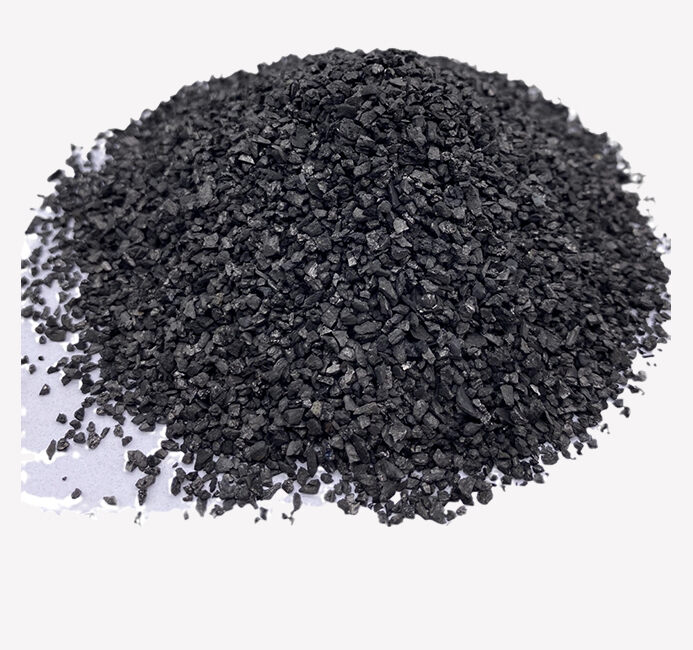
Activated carbon is a highly porous carbon material produced from natural raw materials such as anthracite, wood charcoal, fruit shells and coconut shells. Through physical and chemical activation processes, these raw materials are converted into activated carbon with a large specific surface area and a well‑developed pore structure. Only after going through a series of essential production steps – carbonization, activation, crushing, sieving and washing – can high‑quality activated carbon be obtained.
Because of its unique structure, activated carbon has become an important adsorption and filtration material for removing formaldehyde, harmful gases and organic pollutants in both air and water.
The main raw materials for activated carbon production include:
These raw materials are processed using physical activation and/or chemical activation methods. A typical production process involves:
Carbonization in a carbonization furnace
Raw materials are heated in the absence or near‑absence of oxygen. Volatile components are removed and a basic carbon structure is formed.
Activation in an activation furnace
The carbonized material is further treated with steam, carbon dioxide or chemical activating agents. This step creates a highly developed pore structure and greatly increases the specific surface area.
Crushing and sieving
The activated material is crushed to the required particle size and passed through sieves to achieve uniform granule size.
Washing / rinsing
Impurities and excess ash are removed to improve purity and performance.
After these key processes, the final product is activated carbon, ready for use in air purification, water treatment and many industrial applications.
Activated carbon can effectively remove formaldehyde and harmful gases from indoor air and is widely used in:
The core reason lies in its pore structure and large specific surface area. Activated carbon is a porous solid with numerous micro‑pores and meso‑pores. This structure allows it to make maximum contact with the air and capture pollutant molecules.
Pollutants such as:
can be adsorbed into the pores of activated carbon. Generally speaking, the larger the surface area and the more developed the pore structure, the stronger the adsorption capacity.
For formaldehyde removal, activated carbon mainly works through physical adsorption, so it is often referred to as a physical adsorbent for indoor air purification.
Activated carbon is also a widely used material in water filtration and water purification. It can:
The reason activated carbon can purify water is that it is a porous solid with a large surface area. When water flows through activated carbon, dissolved organic compounds and other impurities are trapped and held in its pore structure. This combination of physical adsorption and chemical adsorption significantly improves water quality.
Studies have shown that activated carbon has strong adsorption capacity for organic molecules with molecular weights in the range of 500–1000. However, the adsorption performance depends on both the pore size distribution of the activated carbon and the properties of the organic compounds.
For organic compounds of similar size:
Therefore, the pore structure and surface chemistry of the activated carbon, together with the characteristics of the pollutants, jointly determine the final purification effect.
Water treatment activated carbon is an ideal and practical material for:
By effectively removing organic pollutants, odor, color and various trace contaminants, activated carbon plays an important role in improving drinking water safety and wastewater treatment efficiency.